Best Flowering Ground Cover Perennials for Clay Soil
Bare stony clay soil looks rough, patchy, and dull, often forming an uneven surface with exposed stones. Clay soil shrinks in dry weather, causing deep cracks, and becomes sticky and heavy when wet, making it hard to work with. Clay holds water too well when wet, leading to puddles and root rot. When dry, it bakes hard, making it difficult for roots to penetrate. Finally, bare soil invites weeds that thrive in poor conditions, which can be harder to remove than planned ground covers.
Benefits of Using Ground Cover Perennials for Clay Soil
- Improves Soil Structure – Many ground covers have deep or fibrous roots that help break up compacted clay, improving drainage and aeration over time.
- Erosion Control – Clay soil tends to retain water, leading to runoff and erosion. Spreading perennials stabilise the soil and reduce erosion.
- Low Maintenance – Once established, ground cover perennials require minimal upkeep, as they return each year and suppress weeds naturally.
- Moisture Retention – Clay holds moisture well, and the dense foliage of ground covers helps prevent evaporation, creating a more stable environment for plants.
- Enhanced Aesthetic Appeal – Flowering varieties add color, texture, and seasonal interest, making clay-heavy areas more visually appealing.
- Supports Pollinators – Many flowering ground covers attract bees, butterflies, and other beneficial insects, promoting biodiversity.
Native English Ground Cover Perennials that Thrive in Clay Soil
All links to our list of Ground Cover Perennials for Clay Soil redirect to image search at Ecosia.org, a European search engine that funds tree planting.
Common Dog Violet (Viola riviniana) – A pretty native violet with delicate purple flowers in spring, ideal for partial shade.
Self-Heal (Prunella vulgaris) – A spreading, low-growing plant with purple flowers that attract bees and thrive in compacted soil.
Wild Thyme (Thymus polytrichus) – A hardy, aromatic ground cover with purple flowers, perfect for drier, well-drained spots in clay.
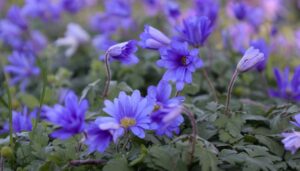
Winter Windflower (Anemone blanda) – an early spring perennial with daisy-like flowers in shades of blue, pink, and white to form colorful carpets.
Common Lady’s Mantle (Alchemilla vulgaris) – soft green leaves, yellow-green flowers, tolerates clay and wet soil.
Greater Burnet (Sanguisorba officinalis) – Red bottlebrush-like flowers, loves moisture.
Biting Stonecrop (Sedum acre)
Wood Saxifrage (Saxifraga umbrosa)
Plants Taller than 20 cm (Not Ideal for Ground Cover)
Red Campion (Silene dioica) – Pink-red flowers from spring to autumn, tolerant of damp, heavy soil. Can reach 30-60 cm in height.
Common Yarrow (Achillea millefolium) – White or pink flowers in summer, deep roots help break up clay soil. Grows to 30-90 cm tall.
Meadow Cranesbill (Geranium pratense) – Native, loves heavy soil, blue-purple flowers. Typically grows 30-60 cm tall.
Germander Speedwell (Veronica chamaedrys) – Delicate blue flowers in spring, great for adding color and attracting insects. Can reach 30 cm in height.
Potentially Invasive or Aggressive Spreaders
Bugle (Ajuga reptans) – Spreads quickly, with blue-purple flowers in spring. Attracts pollinators and tolerates heavy, damp clay.
Lesser Celandine (Ficaria verna) – Early spring bloomer with bright yellow flowers, good for wetter clay areas.
Creeping Jenny (Lysimachia nummularia) – Golden-green foliage with yellow flowers, good for wet clay areas.
Ground Ivy (Glechoma hederacea) – A creeping, shade-tolerant plant with purple-blue flowers that supports pollinators.
Marsh Marigold (Caltha palustris) – Loves damp soil, bright yellow flowers in spring. Grows to around 30 cm to 40 cm.
Garden Match Cards
The Ground Cover Perennials for Clay Soil listed on this page were selected for a gardening project, but are not included in our Garden Match Cards, which focus mainly on edible plants for vegetable gardens, an educational resource based around the idea of companion planting, for playing and garden planning.
Ground Cover Perennials for Clay Soil Photo Credits
Photo of Anemone blanda, commonly known as Winter Wildflower or Flowering Blue Balkan Anemone by Jack Blueberry on Unsplash.