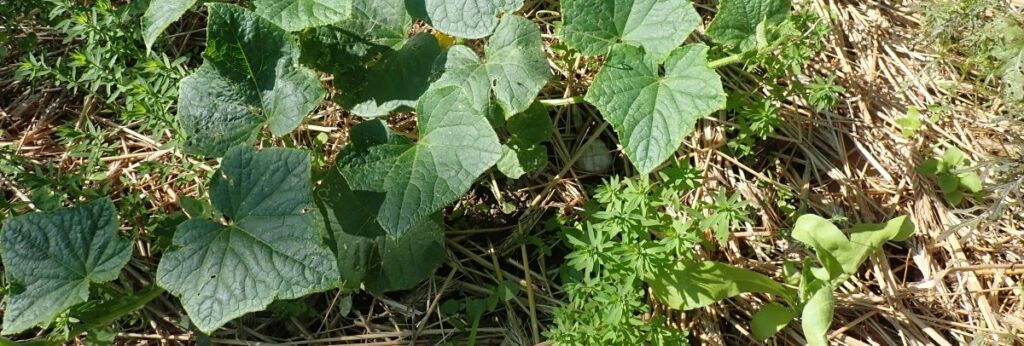
Sandy soil is known for its poor nutrient content and excessive drainage, which makes it prone to drying out and leaching essential minerals needed for plant growth.
A technique called Hugelkultur can significantly improve sandy soil conditions.

The Benefits of Hugelkultur Raised Beds
Hügelkultur beds are created by layering logs, branches, compostable materials, and soil. The decomposing wood at the core acts like a sponge, retaining moisture and gradually releasing nutrients, creating a self-sustaining, fertile environment for plants. This method improves soil structure, enhances water retention, and is especially useful for poor or sandy soils.
Water Retention
In Hugelkultur beds, the wood stored inside plays a key role. Old, decaying wood acts like a sponge, absorbing water when it rains and returning it gradually to the soil, preventing the rapid drying out characteristic of sandy soil.
Improve Sandy Soil Fertility
Wood and branches decompose over time, providing the soil with essential nutrients (nitrogen, phosphorus, potassium) that are lacking in sandy soil.
Less Watering and Fertilising
Building a Hugelkultur bed improves water storage capacity and natural fertilisation, Hugelkultur reduces the need for frequent watering and fertiliser use.
Recycling Organic Materials
You can use old branches, tree trunks, leaves, grass, cardboard boxes or manure – anything that might otherwise go to waste.
Building a Hugelkultur Bed to Improve Sandy Soil Step by Step
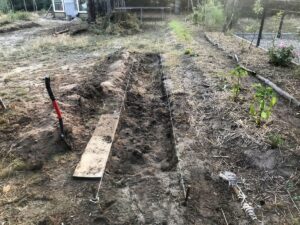
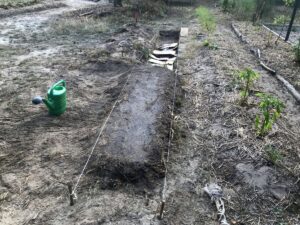
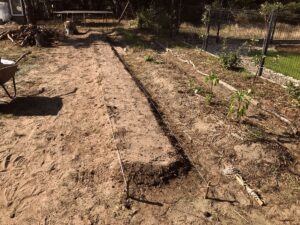
1. marking out the land, in this case the beds are 80cm wide, 10m long
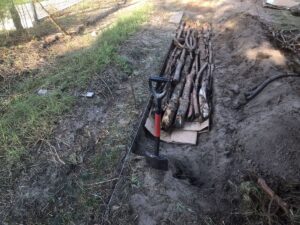
2. dig a trench to the depth of a shovel (about 30cm)
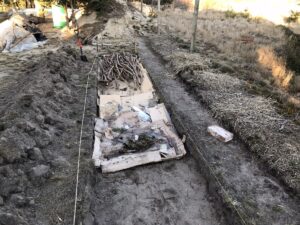
3. add cardboard to the bottom, can be layered in multiple layers
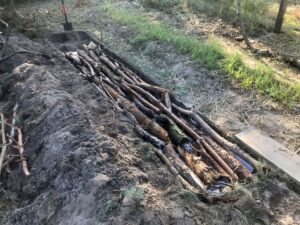
4. add branches, preferably thick, in this case pine branches from what we had on site
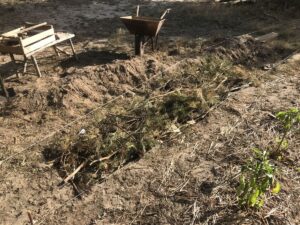
5. add organic matter, smaller sticks, compost, manure, etc.
6. backfilling with the sandy soil you dug up at the beginning
7. construction of the bed is completed, then we recommend sowing the seeds for the afterburn first, such as rye, clover, vetch, mustard, mixture
8. after sowing, add a mulch layer of a few centimetres, e.g. straw, which prevents the soil from drying out
9. in between beds, we have not added anything, but it is recommended to add bark, sawdust, gravel, sand, stones, pavement, whatever is available on site and will reduce weeds & retain moisture.
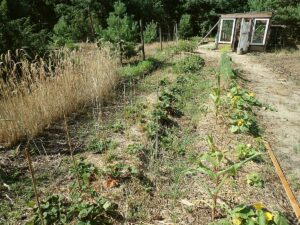
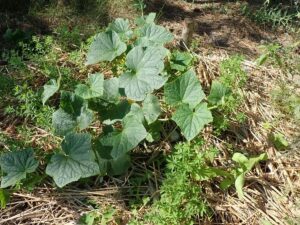
Find out more about Hugelkultur vegetable bed construction at Permaculture Magazine and at the Permaculture Association.
Article written by Garden Match Cards, designed for gardening planning and playing games.